> Uploading knowledge... _
[░░░░░░░░░░░░░░░░░░░░░░░░] 0%

> CHICIO CODING_Pixels. Code. Unplugged.
Game Boy


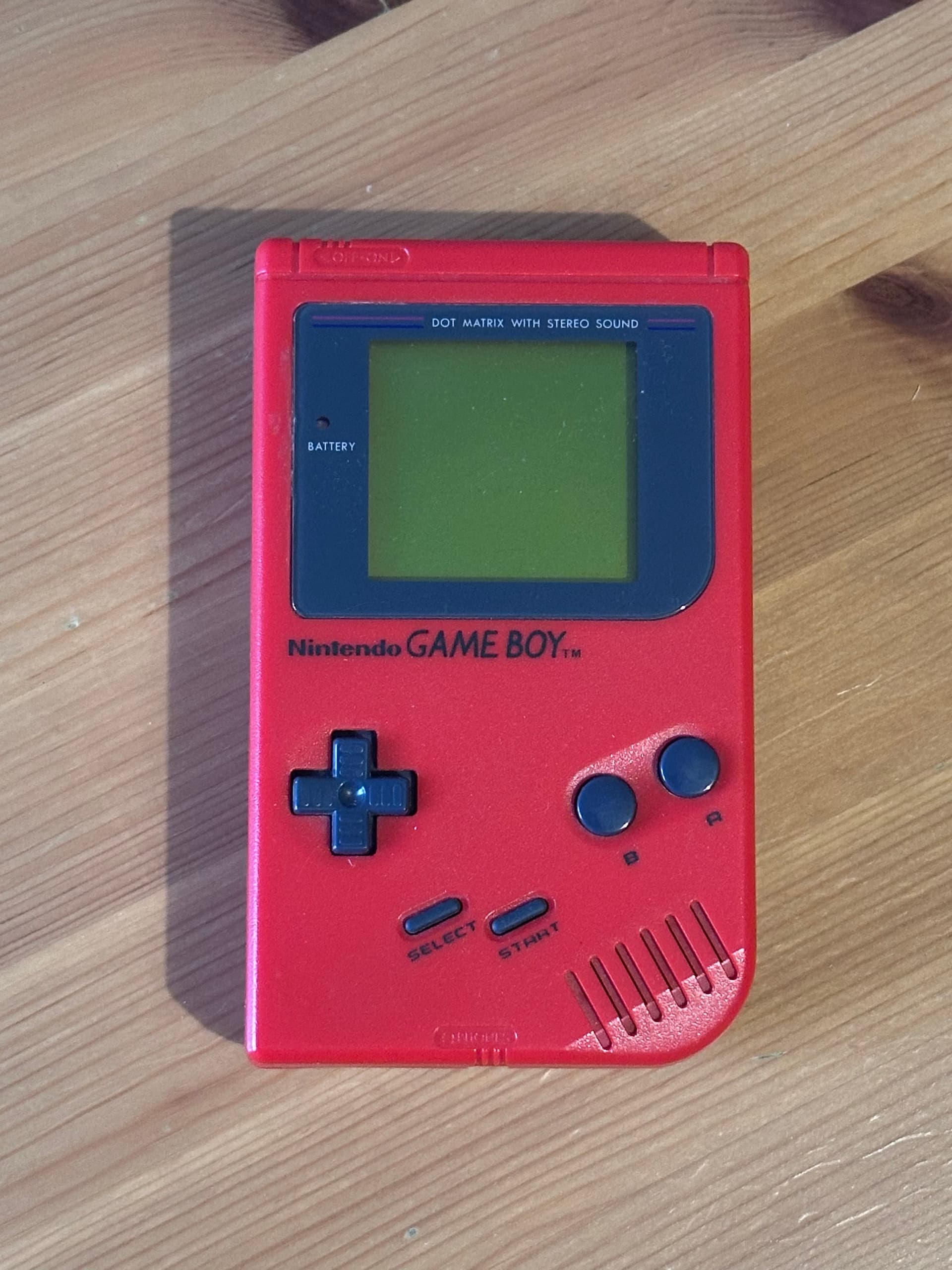
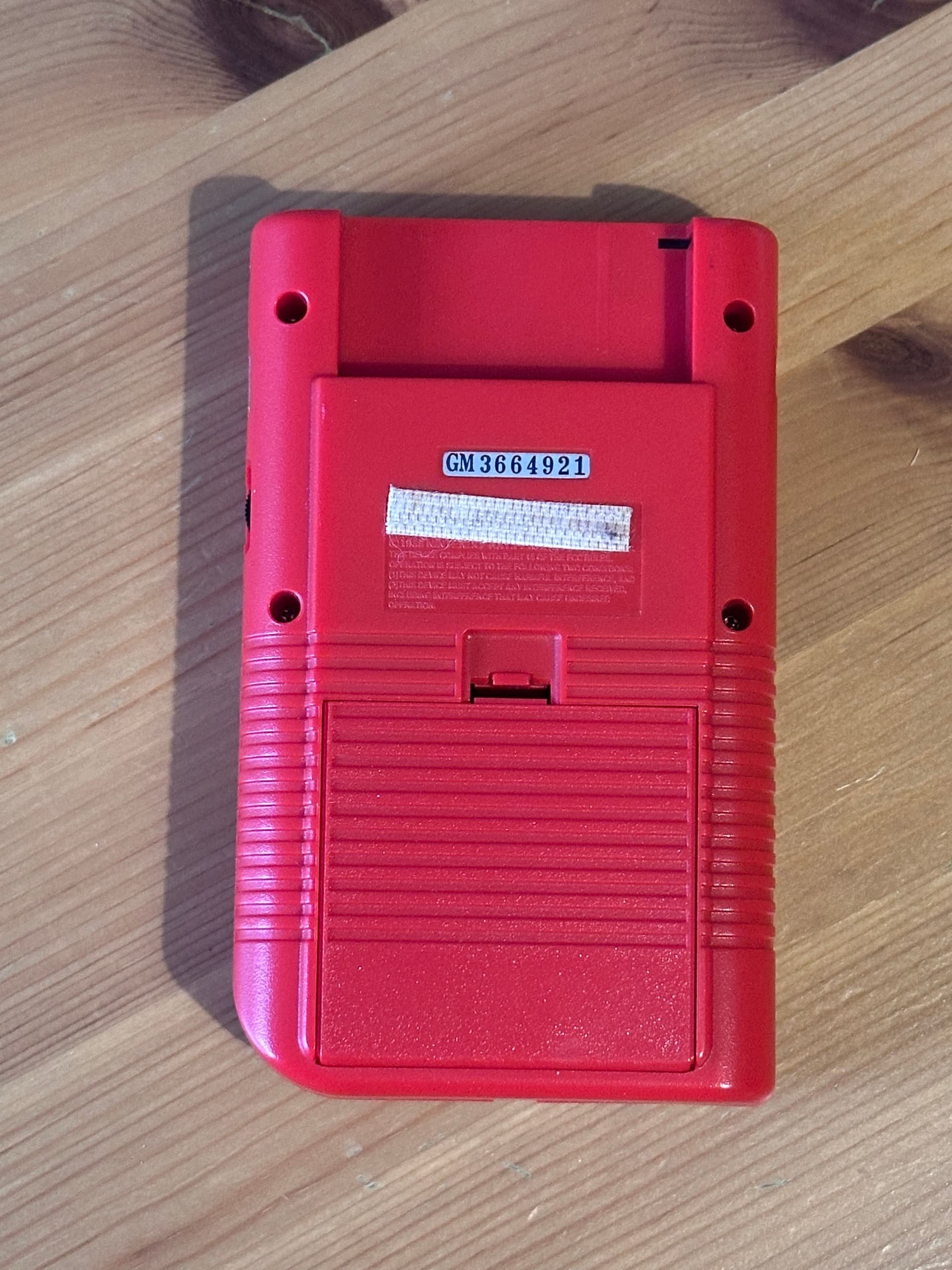
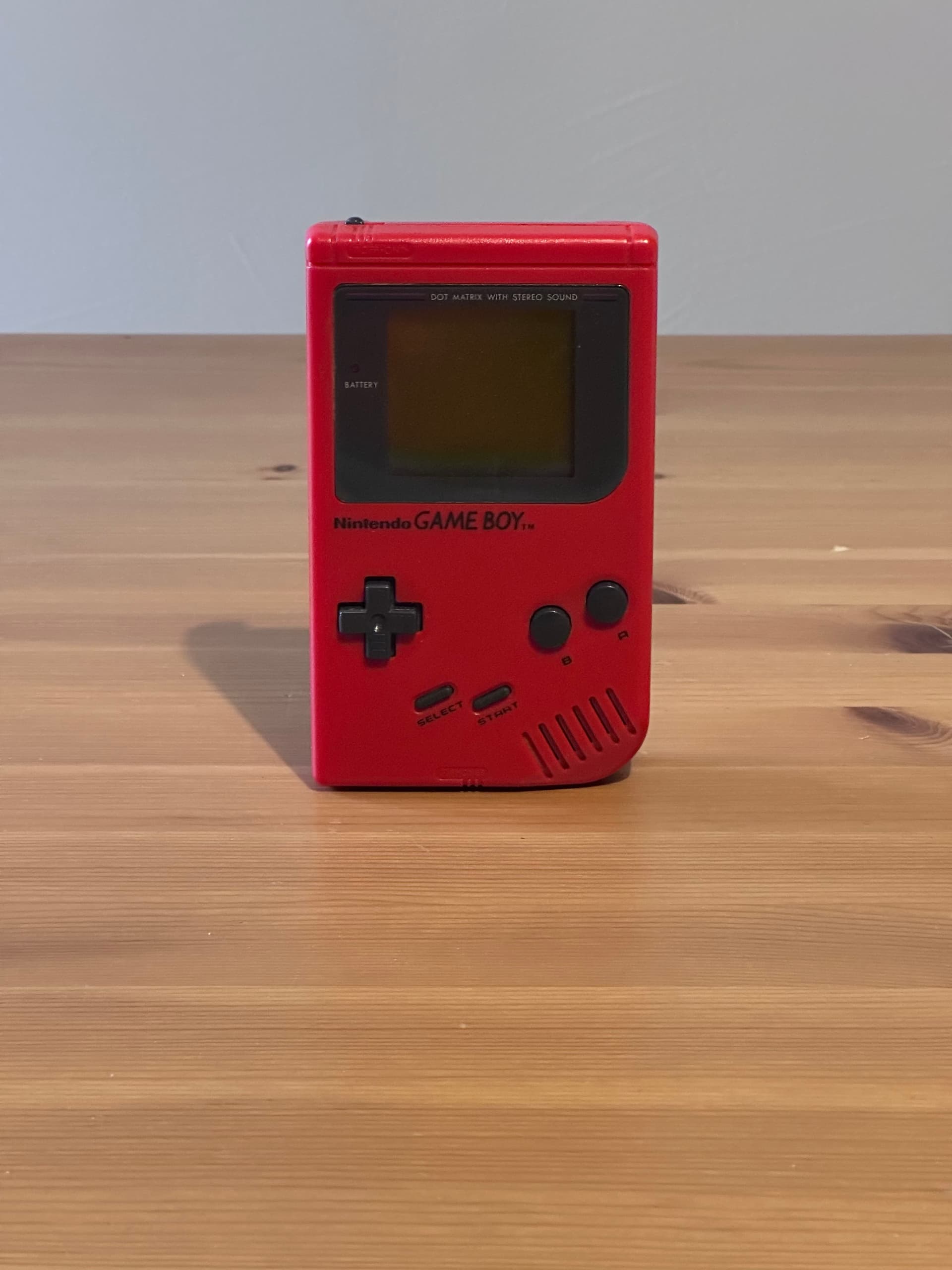
Released:1989
Acquired:1992
Architecture:8 bit
Generation:4th
Hardware specs
| Component | Specification |
|---|---|
| CPU | Sharp LR35902 8-bit, 4.19 MHz |
| System RAM | 8 KB |
| VRAM | 8 KB |
| Audio | 4-channel waveform (stereo via headphone) |
| Storage | Cartridge |
| Video Output | LCD 160×144, 4 shades monochrome |
| Architecture | 8-bit |
Startup
The Game Boy's entire boot sequence lives in just 256 bytes of ROM: it scrolls the Nintendo logo down the screen and plays a single "ding". The twist is that the logo it displays does not come from the console itself. Every officially licensed cartridge carries its own copy of the logo in its header (bytes 0x104 to 0x133), and the boot ROM reads that copy, compares it against its own internal reference, and locks up if the two don't match.
- That check was a legal mechanism, not a technical one. Forcing every cartridge to carry and display Nintendo's trademark meant an unlicensed cartridge had to reproduce that trademark too, giving Nintendo grounds to sue for trademark infringement. Nintendo chose this route over a hardware lockout chip like the one in the NES, likely for cost and power consumption reasons (see Pan Docs and the cartridge header spec).
Trivia & Fun Facts
- The Game Boy was designed by Gunpei Yokoi based on his philosophy "Kareta Gijutsu no Suihei Shikō" ("Lateral Thinking with Seasoned Technology"). Instead of chasing cutting-edge (and expensive) tech, he used mature, affordable components—like the monochrome screen—to ensure the console was durable, cheap, and had incredible battery life.
- Nintendo initially planned to bundle Super Mario Land with the console. However, Henk Rogers convinced Nintendo of America’s president, Minoru Arakawa, that while Mario appealed to kids, Tetris appealed to everyone. This decision is credited with the Game Boy's massive crossover success.
- While its color-screen competitors (like the Sega Game Gear) devoured six AA batteries in just 3–5 hours, the original Game Boy provided up to 30 hours of gameplay on just four AA batteries.